
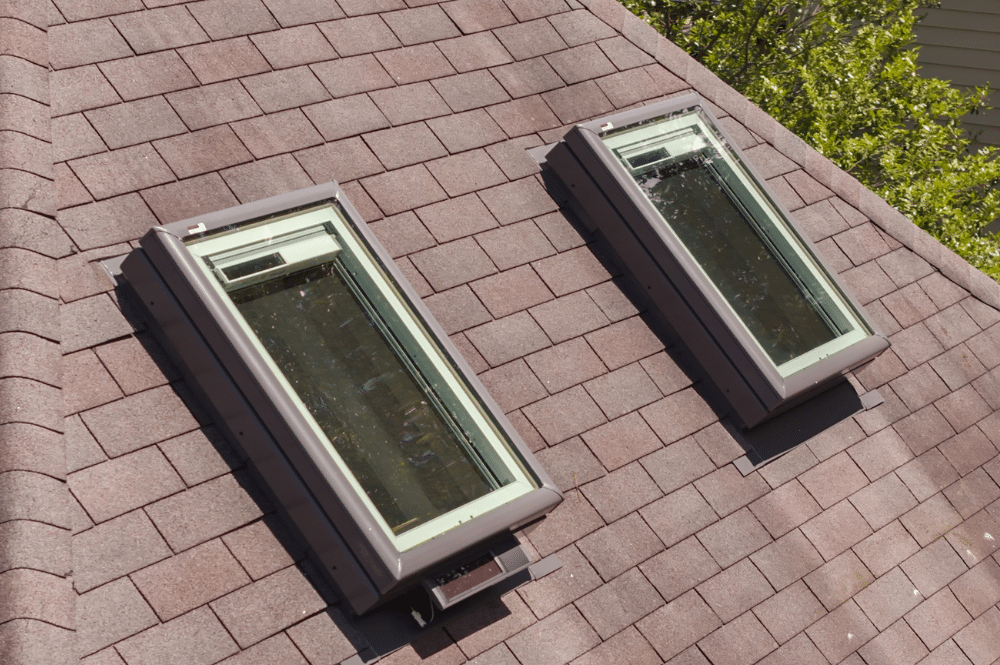
Water on or around a skylight is concerning, but it does not always come from the same source. A roof leak and condensation can leave similar marks while requiring different responses.
Before arranging skylight work in Lynchburg or Bedford, note when the moisture appears and where you see it. Those observations help the contractor investigate the right areas instead of treating every wet skylight as a failed window.
Start with timing
Moisture that appears during or after rain may involve flashing, the skylight assembly, or the surrounding roof. Moisture on an indoor glass surface during cold weather may involve condensation as warm, humid indoor air meets a colder surface.
Timing is useful evidence, not a final answer. More than one issue can be present, and water can move through a roof assembly before it becomes visible.
Look at the location without climbing
From inside, note whether moisture sits on the glass, appears between panes, stains the drywall shaft, or runs from a corner. Photograph the same area over time so changes are easier to see.
Tell the contractor whether the skylight opens, whether it closes properly, and whether there have been previous repairs. If you know the product model or approximate installation date, keep that information handy.
Flashing connects the skylight to the roof
The flashing around a skylight helps direct water around the opening. Its design and installation need to work with the skylight, roof material, and slope. Surrounding shingles or other roof coverings can also be involved.
A surface coating of sealant is not a substitute for understanding that connection. When reviewing skylight services, ask which component appears to be failing and how the proposed work addresses it.
When roof replacement changes the conversation
If the roof is being replaced, discuss the skylight at the same time. Its age, condition, compatibility with new flashing, and expected maintenance all matter. Keeping an older unit may be reasonable in some circumstances, but the decision should be deliberate.
Ask your contractor to explain the scope if the skylight remains versus if it is replaced. Coordinate that decision with the roof replacement plan before materials are ordered.
Questions for the assessment
- Does the evidence point to rain entry, condensation, or both?
- Is the moisture within the glass unit or on an accessible surface?
- What is the condition of the surrounding roofing?
- Can the affected component be repaired, or is replacement more practical?
- Does the scope include any interior finish repairs?
Interior staining may need separate attention after the source is resolved and the area is dry. Make sure that work is included if you expect a fully finished result.
Let the cause guide the solution
A new skylight does not automatically solve an indoor humidity issue, and ventilation changes do not repair damaged flashing. A useful recommendation explains both what was found and why the proposed work fits those findings.
Talk through your project with Perimeter
Perimeter Roofing & Exteriors can help you evaluate the roof and skylight together and understand the next steps for your Central Virginia home. Request an estimate or inspection, or call 434-515-2868.