You had the leaves removed, but the next rain sends water over the edge again. It is frustrating, and it does not necessarily mean the cleaning was wasted. Debris is only one part of a gutter drainage problem.
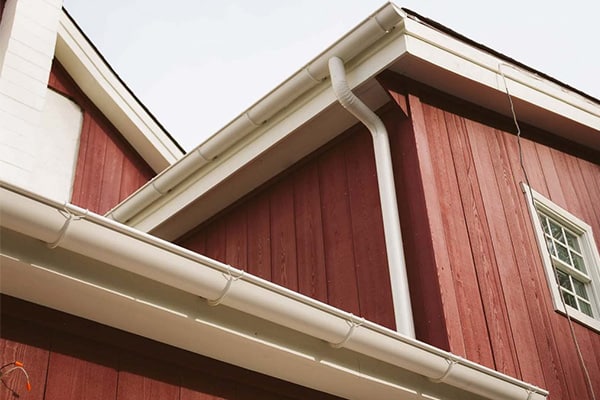
For homes in Lynchburg, Bedford, and Forest, the next step is to look at the whole route water takes: off the roof, through the gutter, into the downspout, and away from the house. Replacing one piece without checking that route can leave the original problem in place.
Start with where the overflow happens
Water spilling along a long section may point to a different issue than a concentrated waterfall beneath a roof valley. Watch from a safe place on the ground during ordinary rain, and note the location. A short video can help explain the problem to your contractor.
Also distinguish overflow from a leak. Water coming through a joint, end cap, or hole can look similar from a distance, but cleaning will not repair that opening.
A clear gutter does not guarantee a clear downspout
Leaves and roof debris can collect at the outlet or farther down the downspout. An underground drain connected to the downspout can also back up. Ask whether the cleaning included checking the outlets and confirming that water could leave the system.
Perimeter’s gutter cleaning services are a useful starting point when buildup is involved. If overflow returns, describe that history so the next visit can focus on drainage rather than assuming the same fix will solve everything.
Check alignment, support, and capacity
Gutters need a path toward their outlets. Sagging sections, loose hangers, or an incorrect slope can leave standing water. A long roof edge with too few outlets may also struggle when a large amount of runoff arrives at once.
Roof valleys deserve special attention because they concentrate water. A contractor can consider the gutter’s position, size, outlet locations, and the roof area draining into it. Bigger gutters are not automatically the answer if the real problem is a blocked exit or a low spot.
Gutter guards are not a cure for every problem
Guards can reduce the amount of debris entering a gutter, but they do not correct poor slope or repair a damaged downspout. Different designs also behave differently with fine debris and concentrated runoff. Ask about cleaning access and ongoing maintenance before choosing a system.
If you are comparing gutters and gutter guards, have the existing drainage problem evaluated first. That gives the new installation a clear purpose.
Questions worth asking at the estimate
- Is the problem a blockage, a leak, an alignment issue, or a capacity issue?
- Can the existing gutter be repaired, or is replacement more practical?
- Where will each downspout discharge?
- Is any fascia damage visible behind the gutter?
- What maintenance will the proposed system still need?
A useful recommendation connects the visible symptom to a specific correction. It should also explain any work that cannot be assessed until the gutter is removed.
Talk through your project with Perimeter
If your gutters keep overflowing, Perimeter Roofing & Exteriors can help you plan the next step for your home in Lynchburg or the surrounding area. Request an estimate or inspection, or call 434-515-2868.